I will manage and host your AI automations with monitoring, fixes and monthly tweaks
About this gig
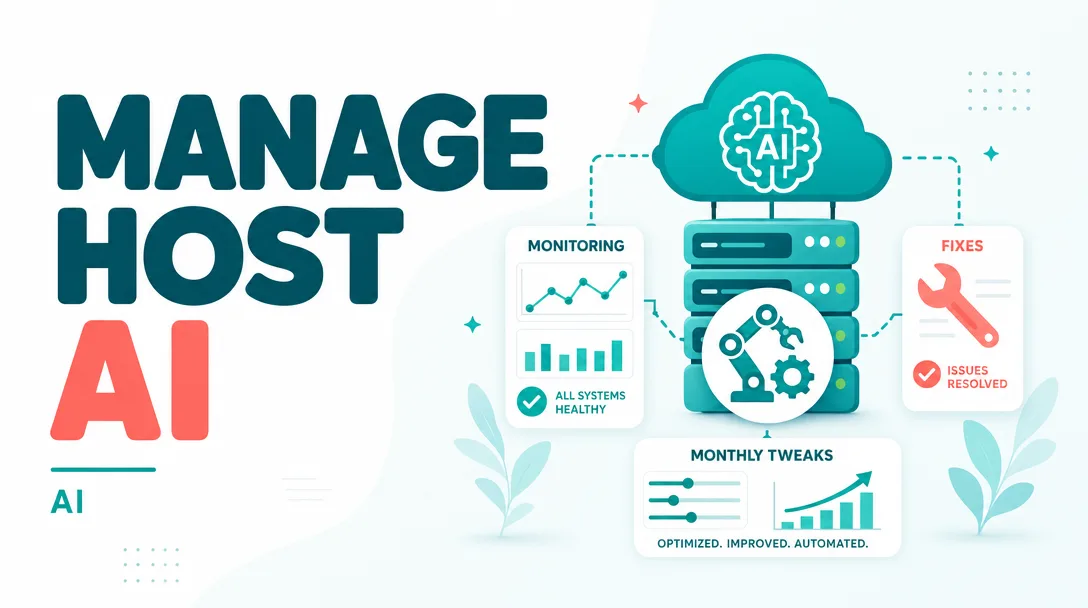
I will manage and host your AI automations so they keep running, get fixed fast when something breaks, and improve a little every month. You build it once; I keep it alive.
What you get
Automations are easy to launch and hard to keep running. APIs change, credentials expire, a webhook silently stops firing, a model deprecates, an upstream tool ships a breaking update — and your workflow dies quietly until someone notices the orders, leads, or reports stopped flowing. This is a hands-on retainer where I take that operational burden off your plate. I host your automations, watch them around the clock, fix them when they break, and spend dedicated time each month making them more reliable.
- A managed home for your automations. I host your flows on a platform suited to them — self-hosted n8n, Make, Zapier, a small cloud worker, or a serverless function — and keep the runtime, dependencies, and credentials patched and current.
- Active monitoring, not "hope it works." Health checks and run-status alerts on every workflow, so a silent failure becomes a notification to me (and you, if you want) instead of a surprise weeks later.
- A fix SLA in plain English. When something breaks, I diagnose and repair it within the response window of your plan. You get told what broke, why, and what I changed — no jargon dump.
- Monthly tweaks and improvements. Each cycle includes a block of dedicated time to refine, extend, or harden your existing automations: new steps, better error handling, edge-case coverage, or small new flows.
- Credential and secret hygiene. API keys, OAuth tokens, and webhooks stored securely, rotated when needed, and never hard-coded where they can leak.
- Error logging and retry logic. Failed runs get captured, retried where it's safe to retry, and logged so we can spot patterns instead of chasing the same bug twice.
- A monthly status report. A short, honest summary: runs completed, failures caught, what I fixed, and what I'd recommend improving next.
- A documented runbook. A living document of how your automations are wired, so you (or any future developer) are never locked in or in the dark.
Plans
| Basic | Standard | Premium | |
|---|---|---|---|
| Automations covered | Up to a few small workflows | A moderate set of workflows | Large / business-critical estate |
| Hosting & uptime monitoring | Included | Included | Included, with higher-frequency checks |
| Failure alerting | Email + chat (Slack/Discord/Telegram) | Email + chat + on-call escalation | |
| Fix response window | Standard business-day | Faster, priority | Fastest, same-day priority |
| Monthly tweak/improvement time | Light block | Larger block | Largest block |
| Monthly status report | Yes | Yes | Yes, with improvement roadmap |
| Runbook documentation | Basic | Maintained | Maintained + change log |
| Direct contact | Async messaging | Async + scheduled check-in | Async + regular call |
Plans differ by how many automations are under management, how fast I respond to breakages, and how much improvement time is included each cycle. If your setup sits between tiers, tell me what you're running and I'll point you to the honest fit.
How it works
- Intake & audit. You tell me what automations you have, where they run, and what they do. I review them, map the dependencies, and flag anything fragile, deprecated, or insecure before I take over.
- Onboarding & access. We set up secure, scoped access to your platforms and credentials. I migrate or connect your flows to a monitored hosting setup — keeping your data and keys under your control wherever possible.
- Instrument & baseline. I add health checks, alerting, error logging, and retries, then record a baseline so we both know what "normal" looks like for your workflows.
- Run & watch. Your automations run under active monitoring. If a check fails or a run errors, I'm alerted and start triage.
- Fix on break. When something breaks, I diagnose, repair, verify the fix end-to-end, and tell you what happened in plain language — within your plan's response window.
- Monthly improvement cycle. Each period I spend the included time on tweaks: hardening weak points, adding requested steps, improving reliability, and clearing the backlog of small asks.
- Report & plan. You get a status report and a short recommendation for what to improve next. We adjust scope as your needs change.
Why choose this
Most automation work is sold as a one-time build and then abandoned. The build is the easy part — the value evaporates the first time it silently fails and nobody is watching. This service exists for the after: someone accountable for keeping your automations alive, responsive, and improving over time.
I treat your workflows as production systems, not toys. That means real monitoring, real retries, secure credential handling, and clear communication when something goes wrong. You get a single point of contact who already knows how your setup is wired, so a breakage is a quick fix instead of a fresh investigation every time. And because improvement time is baked into every cycle, your automations get better month over month instead of slowly rotting.
You also stay in control. Everything is documented in a runbook, your credentials remain yours, and there's no lock-in — if you ever want to bring it in-house or move on, you leave with full documentation of how everything works.
Who it's for / use cases
- Founders and small teams running lead capture, onboarding, or notification flows who can't afford to babysit them.
- Agencies that built automations for clients and need a reliable partner to keep them running without staffing a full ops role.
- E-commerce and SaaS operators with order-sync, inventory, billing, or CRM automations where a silent failure costs real money.
- Content and marketing teams running scheduled publishing, data enrichment, or reporting pipelines that must not skip a beat.
- Anyone with an n8n, Make, or Zapier setup that "mostly works" but breaks just often enough to be a constant low-grade stress.
Typical jobs: keeping a webhook-driven CRM sync alive, monitoring a nightly report generation flow, maintaining an AI-assisted email or support pipeline, fixing flows after an API or model deprecation, and steadily adding the small improvements you never have time to build yourself.
FAQ
Q: Which platforms and tools do you support? I work with common automation stacks including n8n, Make (Integromat), Zapier, and custom scripts or serverless workers. If your automations call AI models or third-party APIs, I can manage those integrations too. Tell me your stack and I'll confirm fit before we start.
Q: Do you host the automations, or do they stay on my account? Either way works. I can host them on managed infrastructure with monitoring, or manage them in place on your own accounts. We pick whatever keeps your data secure and avoids lock-in, and I document the choice in your runbook.
Q: What counts as a "fix" versus a new build? Fixing means restoring something that used to work after a breakage — an expired token, a changed API, a broken step. Building something brand new, or significantly expanding scope, comes out of your monthly improvement time or is scoped as a separate piece of work. I'll always tell you which bucket a request falls into before doing it.
Q: How will I know if something breaks? You'll get an alert through your plan's channels (email, and chat on higher tiers), and so will I. In most cases I'll have already started fixing it by the time you see the notification, and I'll follow up with what happened.
Q: How do you handle my credentials and API keys? Securely and with least-privilege access. Keys are stored in a secrets manager or the platform's native vault, never hard-coded in plain text, and rotated when needed. You can revoke my access at any time.
Q: Can you take over automations someone else built? Yes. The intake includes an audit where I map out an existing setup, document how it works, and flag anything fragile before taking responsibility. Inherited automations are a common starting point.
Q: What happens if I want to leave or bring this in-house? You take the runbook and full documentation with you, and I help with a clean handoff. No lock-in — the goal is that your automations keep running whether or not I'm the one watching them.
Q: How quickly do you respond when something goes down? It depends on your plan: Basic is a standard business-day window, Standard is prioritized and faster, and Premium gets same-day priority handling. The exact window is set when we agree on scope so there are no surprises.
Reviews★0(0)
No reviews yet — be the first after your purchase.